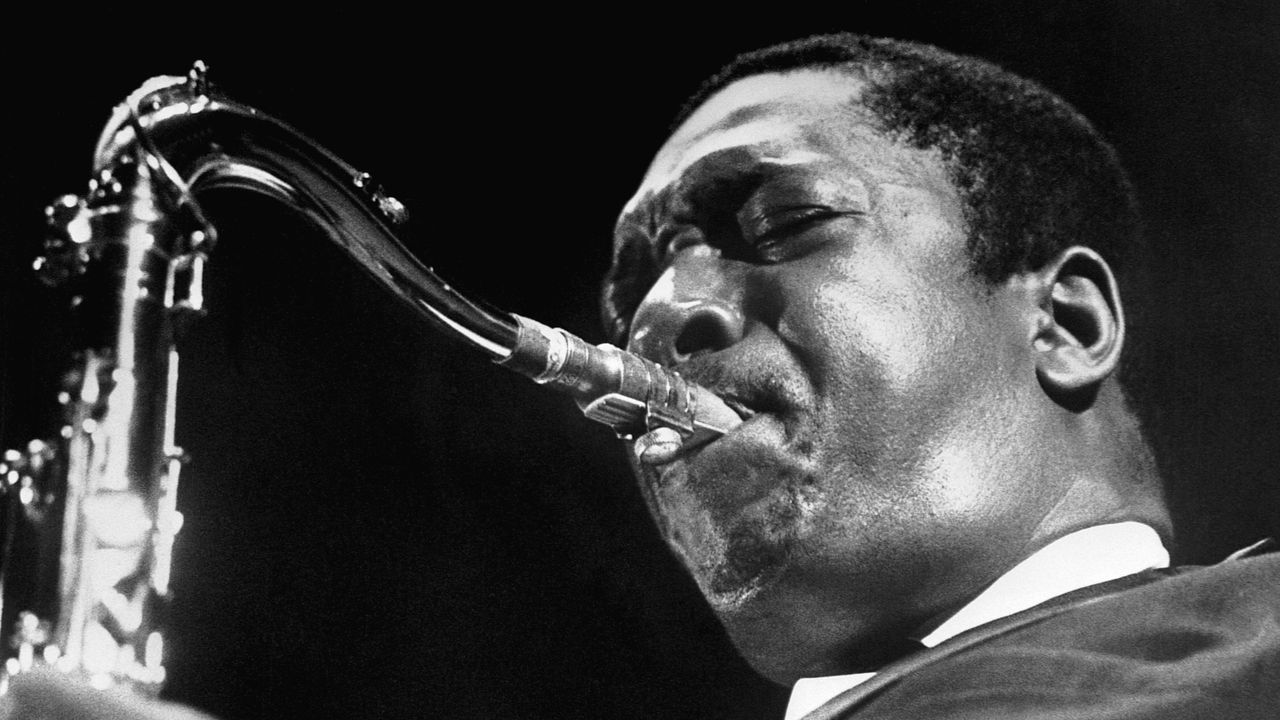
September 23, 2026, marked what would have been the 100th birthday of one of the most influential musicians in jazz history, John Coltrane.
It’s hard to believe that a man who passed away at the young age of 40 years old was able to leave behind such an astounding legacy. His life was far too short, but it had an impact so large that it changed the world of jazz forever. Now, a century after his birth, musicians around the world are still studying him in-depth, listening intently to him and being challenged by the boundaries he refused to stop pushing.
John William Coltrane was born on September 23, 1926, in Hamlet, North Carolina, and grew up in nearby High Point. In his early years of being in the music world, he was known as Johnny Coltrane but later was enduringly nicknamed “Trane”. He first studied clarinet before moving onto the alto saxophone and eventually the tenor saxophone, which would become the instrument closely associated with his name.
The intriguing part of any legend like Coltrane’s is — how did music become a feature in his life? His early musical journey started in 1943 when he moved to Philadelphia with his family — a good place to start, as it was fast becoming a major hub for young jazz musicians. As a teenager, Coltrane studied music at the Ornstein School of Music. Like most young men in the U.S. at that time, he served in the military, joining the U.S. Navy during the end of World War II. This did not stop him from fine-tuning his music skills. He joined a Navy band and brought jazz to the people he served with.
Once his time in the Navy was done and dusted, Coltrane did not hesitate to throw himself back into his music. He continued his studies at Granoff Studios/Granoff School of Music, supported by the G.I. Bill. It was Dennis Sandole, a teacher at Granoff, with whom he had an especially important relationship with. Sandole, who was a guitarist and composer himself, instilled the importance of music theory and harmony in Coltrane. Coltrane studied with him from the late 1940s into the early 1950s.
During these years, Coltrane also built some priceless friendships. He played with musicians including Dizzy Gillespie, Earl Bostic and Johnny Hodges. Once he crossed paths with Miles Davis, the legend of legends, his music now caught the attention of a much wider audience.
By joining Miles Davis in the mid-1950s, Coltrane became part of a powerhouse group in jazz history. He played on several landmark recordings, including the 1959 masterpiece Kind of Blue. During this period, he also spent time playing with another jazz giant, Thelonious Monk.
It sounds like he had an easy ride, but it was far from that. His journey was certainly not without its struggles. Coltrane battled alcohol and heroin addiction. His addictions started around 1951, in fact. He drank heavily. Despite his talent and impact on the jazz world at the time, he became unreliable professionally. Both Dizzy Gillespie and Miles Davis gave him the boot from their bands at different points. Davis fired him in 1957.
That 1957 dismissal became his wake-up call. Coltrane headed back to his Philadelphia home and went through severe withdrawal and got clean. He later described this period as a profound spiritual awakening. The experience became deeply connected to the direction his life took, and of course the music he created after his recovery. It wasn’t just a new chapter but an extraordinary period of musical transformation.
Coltrane put everything into mastering his skill. He wasn’t satisfied with simply being a brilliant saxophone player. It seemed as though he was constantly searching for something more in his music. He explored harmony, rhythm, sound and eventually spirituality itself.
By the end of the 1950s, his mastery of the saxophone had become unmistakable. His fast cascades of notes became known as “sheets of sound.” The album Giant Steps in 1960 had brutally complex chord progressions. It would become both legendary and unbelievably challenging for generations of jazz musicians to attempt playing with the precision John Coltrane did.
Coltrane was nowhere near finished. He put together a quartet that consisted of pianist McCoy Tyner, bassist Jimmy Garrison and drummer Elvin Jones. Together, they created some of the most mind-blowing jazz recordings of the 1960s. Again, music that would influence hundreds of musicians for years to come.
Coltrane took the well-known song “My Favorite Things” by Richard Rodgers and Oscar Hammerstein II and interpreted it into something completely unique. The soprano saxophone became another integral part of his sound, and the recording introduced many listeners to a very different side of jazz that would possibly not have been heard had it not been for Coltrane.
Then, in 1964, came A Love Supreme. Undoubtedly a landmark recording of jazz, but also of modern music. It was far from just a jazz album. He drew from his experiences during the darker times of his drug addiction recovery. Deeply personal. He wasn’t simply performing; it was an expression of gratitude, faith and his continued search for meaning.
The legend’s searching continued right until the end. His music became increasingly experimental, moving towards free jazz and sounds that could be challenging, intense and sometimes completely unlike anything audiences had heard from him before. He simply refused to stand still.
His body sadly did come to a standstill when he died of liver cancer on July 17, 1967. The opportunity to see where his journey would take him was halted far too soon. It’s almost impossible to imagine what else he might have created had he been given another 20, 30 or even 40 years.
What made his legacy profound? He accomplished an extraordinary amount even though his years were cut so short. His influence did not end with jazz saxophonists. Generations of musicians have garnered inspiration from his approach to improvisation and harmony. More than anything, the simple idea that, as an artist, you should never stop searching and experimenting with your instrument of choice.
Unsurprisingly, the recognition of his talent continued too. Coltrane received a posthumous Grammy Award, a Grammy Lifetime Achievement Award and, in 2007, a special Pulitzer Prize citation recognising his extraordinary contribution to jazz.
One hundred years after John Coltrane was born and almost sixty years after his death, his music isn’t just a dusty museum piece. Put on tracks “Giant Steps”, “My Favorite Things”, “Blue Train” or “A Love Supreme” today and there is still something urgent and yearning about it. There is something to discover no matter how many times the songs are played and listened to.
John “Trane” Coltrane left an enormous footprint in such a painfully short and talented lifetime. A century after his birth, musicians are still following the paths he opened.
At the end of all that is said and done, all the accolades and awards, for Coltrane perhaps the greatest honour, however, is simply that people are still listening.
Happy 100th Birthday, John Coltrane.